|
1
|
|
|
2
|
- Bylaw 6
- Beginning in 2007-2008, students who have represented a high school at
any level while not yet enrolled in grade 9 who then do not enroll at
that particular high school are ineligible for one year.
- Bylaw 9
- Make certain you know that students who are not eligible to play in
next game cannot practice (exception: sportsmanship)
|
|
3
|
- Bylaw 10
- Refer ALL students and/or parents to school administration. Coaches, do
not give tours, walk throughs, information, etc. to unenrolled
students.
- Restrictions also apply to current parents of players and other
boosters. .
|
|
4
|
- Bylaw 25
- Know the scrimmage restrictions. Two three-hour periods after first day
of practice (October 15)
- Limit of seventeen (17) matches as a school for the year. Multiple
session meets/matches/tournaments count as one against the limit.
|
|
5
|
- Bylaw 27
- All coaches must have 64 hours college credit unless employed in a
district which has an emergency exception to the substitution
requirements through EPSB.
- Not a new rule, actually came into place in early 1990s. Often ignored
or not applied. Extreme Liability for schools.
|
|
6
|
- Disqualifications
- Must be reported within 24 hours (anything grades 9-12)
- Web site only reporting
- Schools request reinstatement after officials’ report
|
|
7
|
- Postseason Changes for Officials
- Must have been licensed on time to do postseason (rounds 2 through 5)
- Must score 80 on Part II exam
- Part II exam dates will be in December (by mail)
- Pay Scale for Officials
|
|
8
|
|
|
9
|
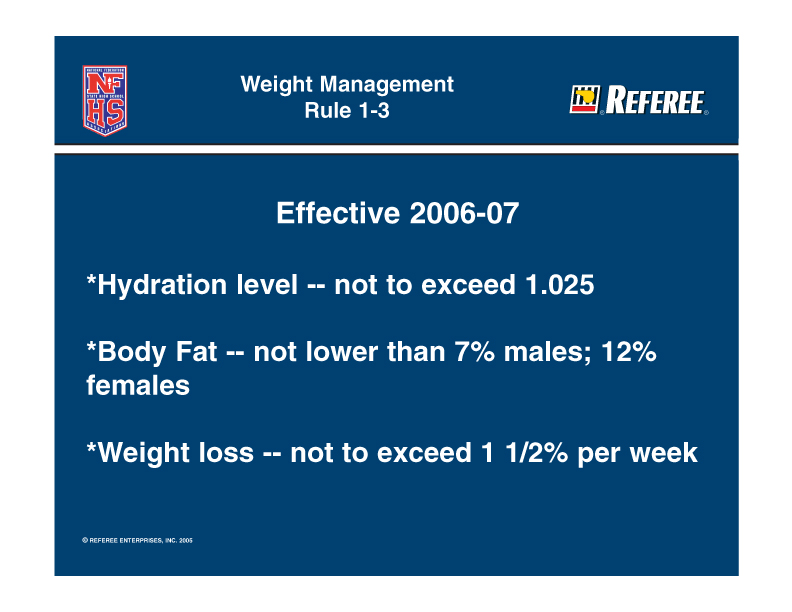
- Time Periods for Measurements
- Skin fold measuring may begin on the first date of practice. All wrestlers, including those coming
out late, must have their minimum weight established prior to any
competition.
- Skin fold measuring must be completed by the first competition.
Athletes coming out after that time must be tested, but their alpha
weight is now their minimum weight.
- Results of measurements will be posted on the KHSAA web site.
|
|
10
|
- Responsibilities of Schools in the Measurement Process
- It is the school’s responsibility to contact an approved KHSAA skin
fold tester. Each school may
designate their own assessor and a current list will be maintained on
the KHSAA web site.
- The school must make sure the assessor has available at the time of the
skin fold measuring: 1) a system
for measuring the athlete’s hydration; 2) a scale, 3) skin fold
measurement equipment.
- The school shall see that all charges for skin fold measuring are
paid. (KHSAA certified skin fold
measurers may charge up to $5.00 per wrestler measured.)
- The school will be sent a form to submit to the KHSAA the name of the
person(s) that will be trained to do body fat testing. An updated form is required for the
2006-2007 school year from all schools.
|
|
11
|
|
|
12
|
|
|
13
|
|
|
14
|
|
|
15
|
|
|
16
|
|
|
17
|
|
|
18
|
|
|
19
|
|
|
20
|
|
|
21
|
|
|
22
|
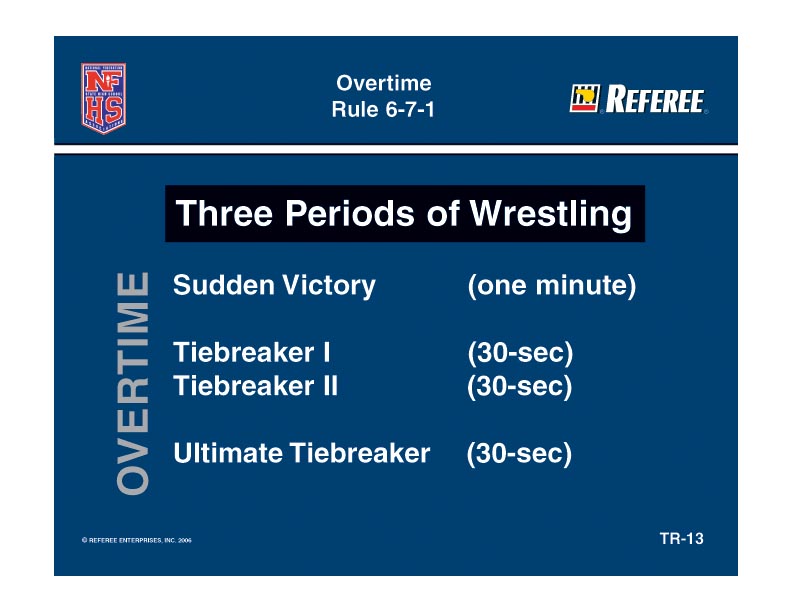
- Quickly verify that overtime is needed.
- Remember that all penalties, cautions, warnings, time-out and injury
time are cumulative throughout the regular match and the overtime
period.
- A fall or disqualification terminates any of the overtime periods, match
is over.
- No rest between regulation match and sudden victory period.
- In sudden victory one minute period, wrestling starts in the neutral
position. (Note: the only thing
that could change this would be the second injury timeout)
- The wrestler that scores the first points in the sudden victory period
is declared the winner
|
|
23
|
- If no winner is declared at the end of the sudden victory period, then
two 30 second tie-breaker periods will be wrestled.
- Both periods will be wrestled unless, disqualification or a fall occurs.
- The referee shall flip the disk to determine choice for the starting
position of the first tie-breaker period. Choice may be top, bottom or
defer. NO NEUTRAL!
|
|
24
|
- At the conclusion of the first tie-breaker period the opponent will have
the choice of top or bottom.
- Whichever wrestler has scored the most points in the two 30 second
tie-breaker periods will be declared the winner.
- Remember if a fall or disqualification occurs in either of the 30 second
tie-breaker periods the match is over.
|
|
25
|
- Should the score be tied at the end of the two 30 second tie-breaker
periods, one ultimate 30 second tie-breaker period will be wrestled.
- Choice for position in the 30 second ultimate tie-breaker period will be
given to the wrestler that scored first point(s) in the 6 minute regulation match. Double stalling points or simultaneous
penalties shall be considered as
no points for the purpose of choice in the ultimate tie-breaker.
- If no points were scored, choice will be determined by a flip of the
disk. They must choose top, bottom or defer.
|
|
26
|
- The wrestler who scores the first point(s) during the ultimate
tie-breaker will be declared the winner.
- If no points are scored in the ultimate tie-breaker period, the
offensive wrestler will be declared the winner and one match point shall
be added to the offensive wrestler’s score.
- Remember a fall or disqualification terminates any of the overtime
periods.
|
|
27
|
- Remember that the Ultimate tie-breaker period is different than the rest
of the match.
- The goal of the wrestler is to control the bottom wrestler and the goal
of the bottom wrestler is to get away or score.
- Controlled wrestling should not be confused as stalling in this
situation.
- There would be times when the top wrestler could be considered stalling,
like grabbing a leg an hanging on.
Each state should review this situation with their officials and
coaches.
|
|
28
|
|
|
29
|
|
|
30
|
|
|
31
|
|
|
32
|
|
|
33
|
- Ringworm = 59%
- Impetigo = 23%
- Herpes = 7%
- Boils = 2%
- Other (unknown) = 9%
|
|
34
|
- MRSA - Methiciilin Resistant Staphylococcal Aureus
- Aggressive bacteria that spreads quickly
- Usually starts looking like a boil or small abscess
- Can cause serious skin and muscle damage
- Rarely spreads to the lungs and causes respiratory damage
|
|
35
|
- Clean clothes, clean athletes, clean equipment and clean wrestling mats
- Never share towels or equipment
- Treat and cover all abrasions
- Remove individuals with suspect skin conditions from practice and
competition
- Seek medical intervention
|
|
36
|
- Action Plan
- If you suspect that a player has a concussion, you should take the
following steps:
- 1. Remove athlete from play.
- 2. Ensure athlete is evaluated by an appropriate health care
professional. Do not try to judge the seriousness of the injury
yourself.
- 3. Inform athlete’s parents or guardians about the known or possible
concussion and give them the fact sheet on concussion.
- 4. Allow the athlete to return to play only with permission from an
appropriate health care professional.
|
|
37
|
- Signs Observed by Coaching Staff
- Appears dazed or stunned
- Is confused about assignment
- Forgets plays
- Is unsure of game, score or opponent
- Moves clumsily
- Answers questions slowly
- Loses consciousness
- Shows behavior or personality changes
- Can’t recall events prior to hit
- Can’t recall events after hit
|
|
38
|
|
|
39
|
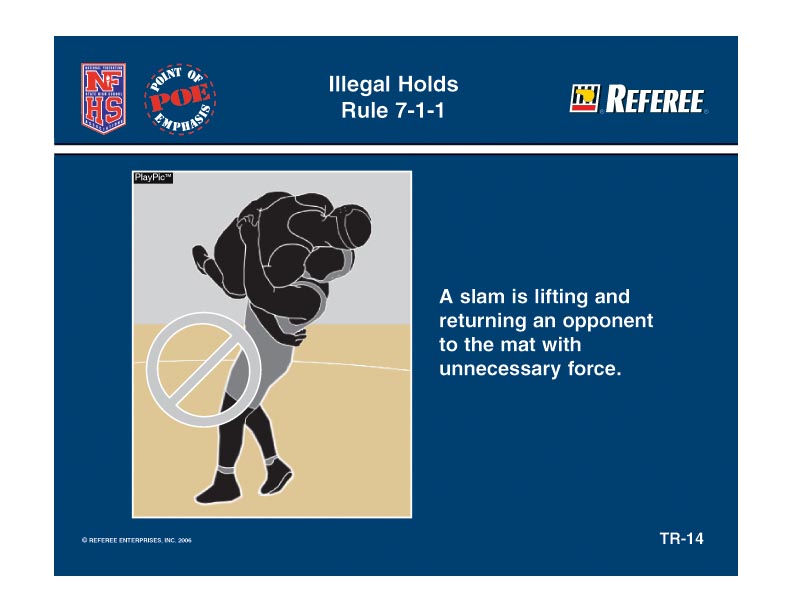
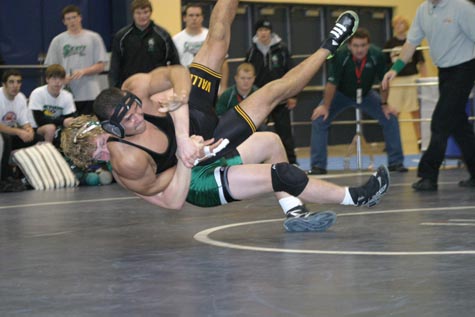
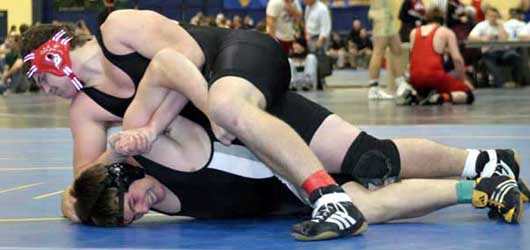
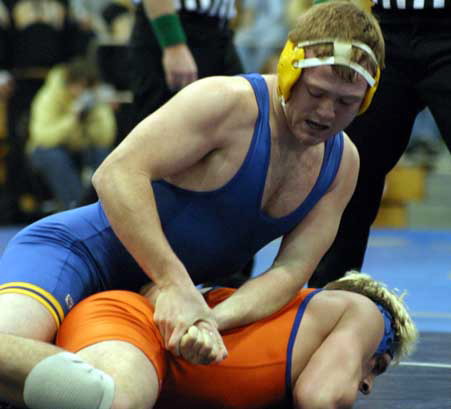
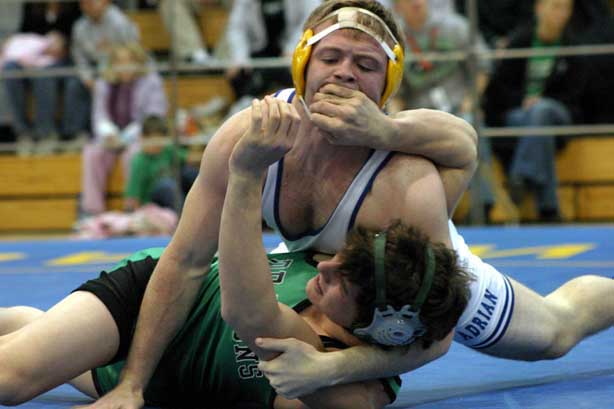
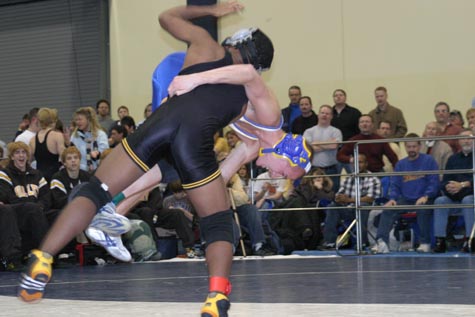
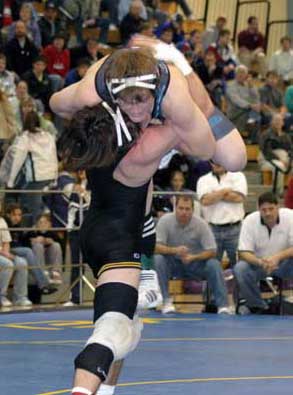
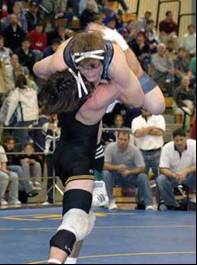
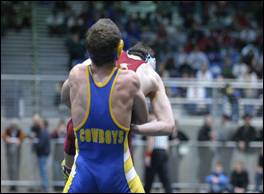
- Any hold used in such a way as to endanger life and limb is illegal.
- Holds are illegal when a body part is forced beyond limit of normal
range of movement,
- Or, when unnecessary force is applied to an opponent.
|
|
40
|
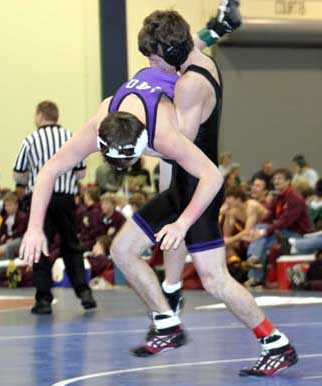
- Involves physical acts that occur during wrestling.
- Includes any act which exceeds normal aggressiveness.
- Forceful crossface.
- Knee or forehead used in a punishing way.
|
|
41
|
|
|
42
|
|
|
43
|
- Officials must focus on the degree of force applied.
- Caution or penalize the wrestler when the action goes beyond normal
aggressiveness.
- Continued acts of unnecessary roughness may be construed to be flagrant
misconduct.
|
|
44
|
|
|
45
|
|
|
46
|
|
|
47
|
|
|
48
|
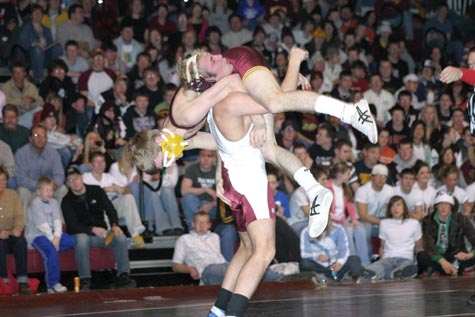
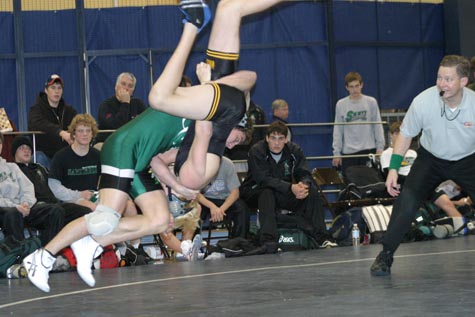
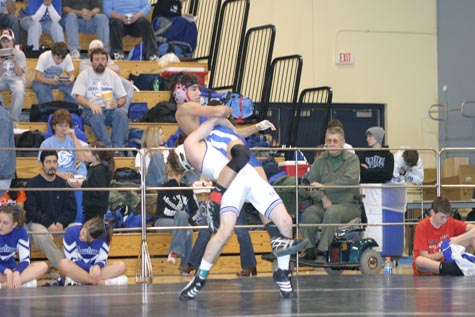
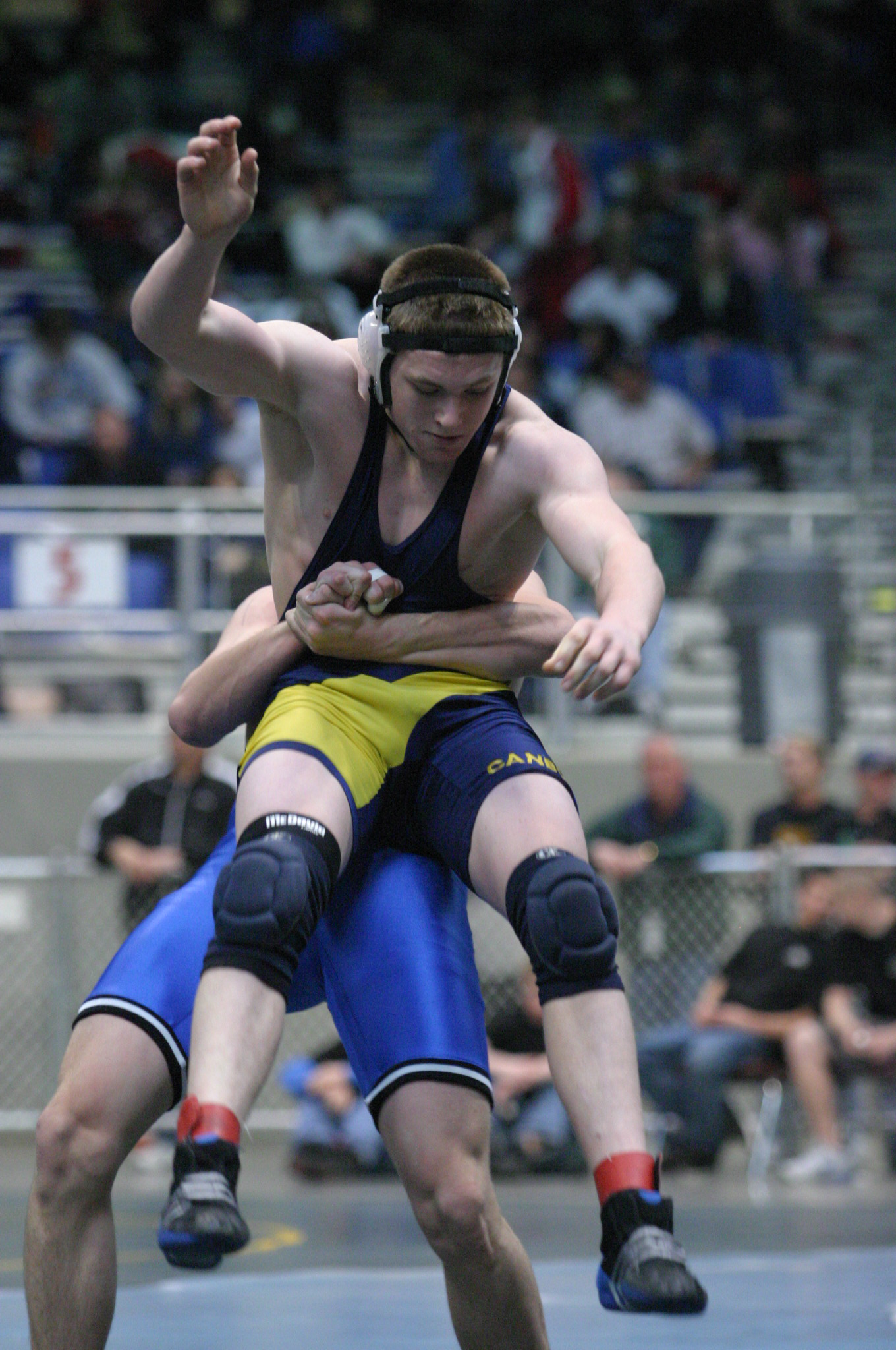
- An intentional drill or forceful fall back is illegal.
- Usually occurs when the defensive wrestler, from a standing position
goes forcibly to the mat while the offensive wrestler has a scissors or
cross body ride.
|
|
49
|
|
|
50
|
|
|
51
|
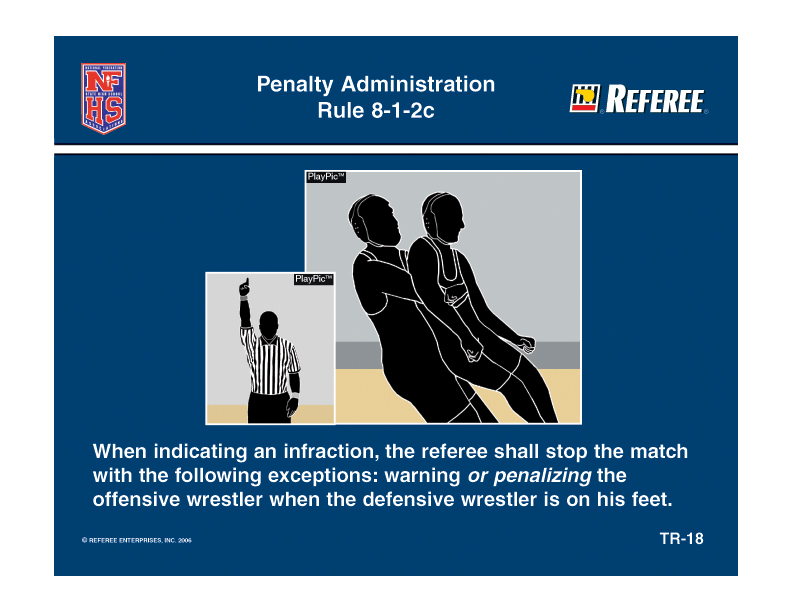
- Referee shall immediately stop the match when indicating an infraction
of slam or unnecessary roughness.
- Penalties for unnecessary roughness and slams follow the progression on
the penalty chart.
- 1st violation- 1 pt.
- 2nd violation- 1 pt
- 3rd violation- 2 pt.
- 4th violation- Disqualification
|
|
52
|
- Continuing acts of unnecessary roughness may be construed as flagrant
misconduct.
- Results in disqualification.
- Deduction of 3 team points.
- Immediate removal from premises.
|
|
53
|
- If an illegal hold, unnecessary roughness, slam results in an injury to
offended wrestler, he is entitled to 2 minutes recovery time.
- If unable to continue wrestling following recovery time, offended
wrestler will win the match on default.
|
|
54
|
- Recovery time used due to unnecessary roughness or slams is not deducted
from injury time.
- Injured wrestler cannot take injury time immediately following recovery
time.
|
|
55
|
|
|
56
|
|
|
57
|
|
|
58
|
|
|
59
|
|
|
60
|
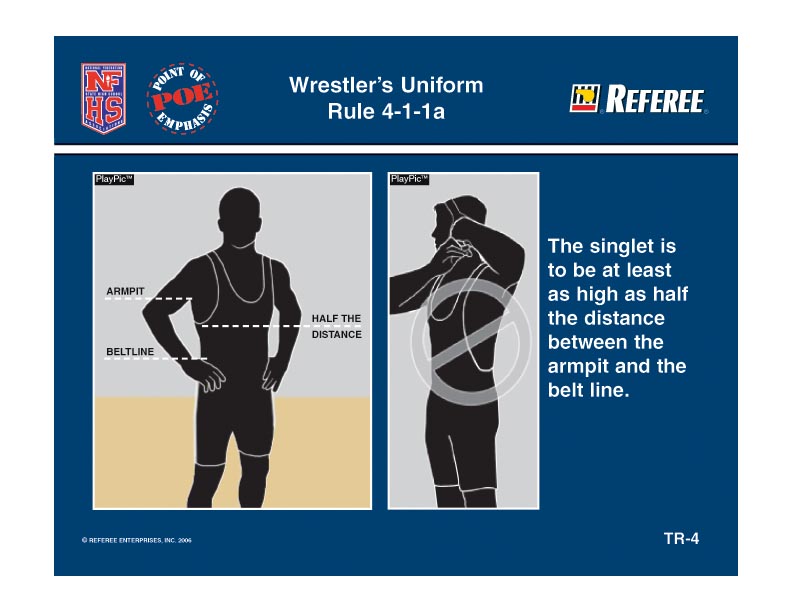
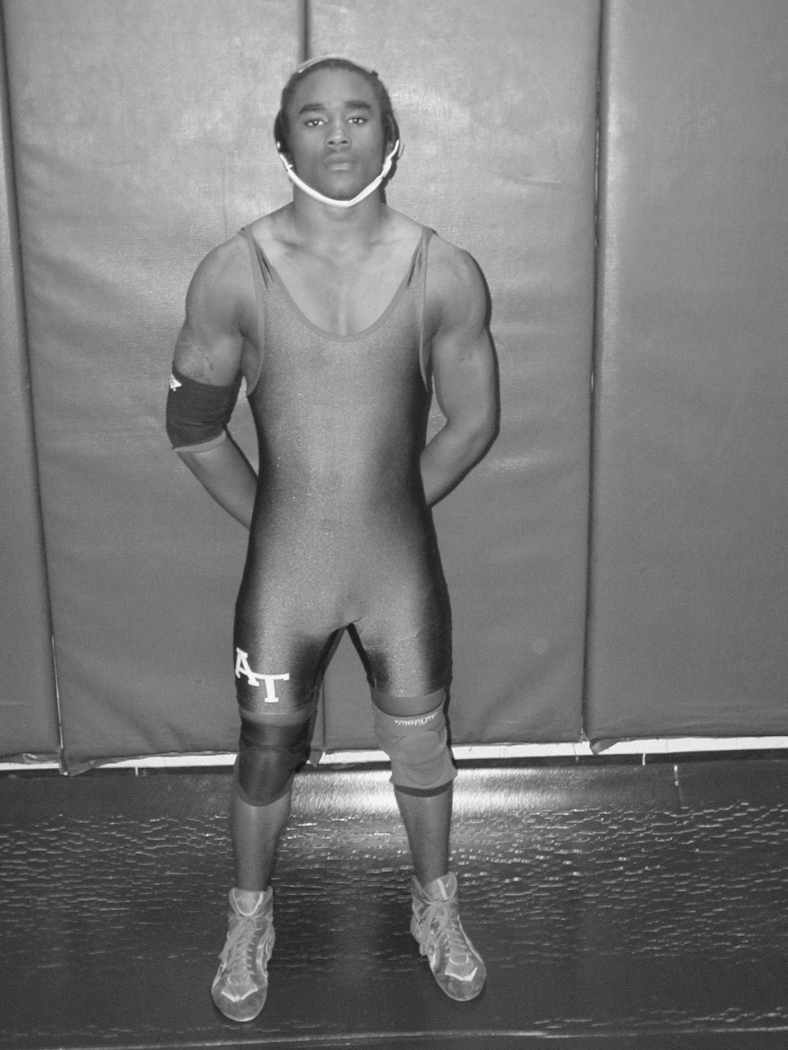
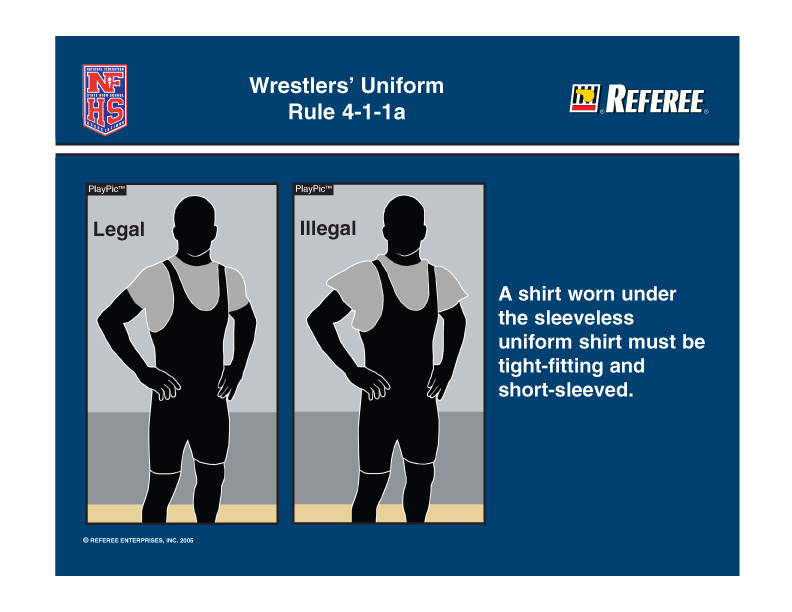
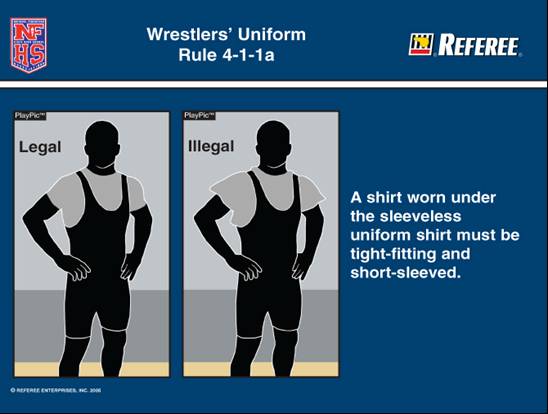
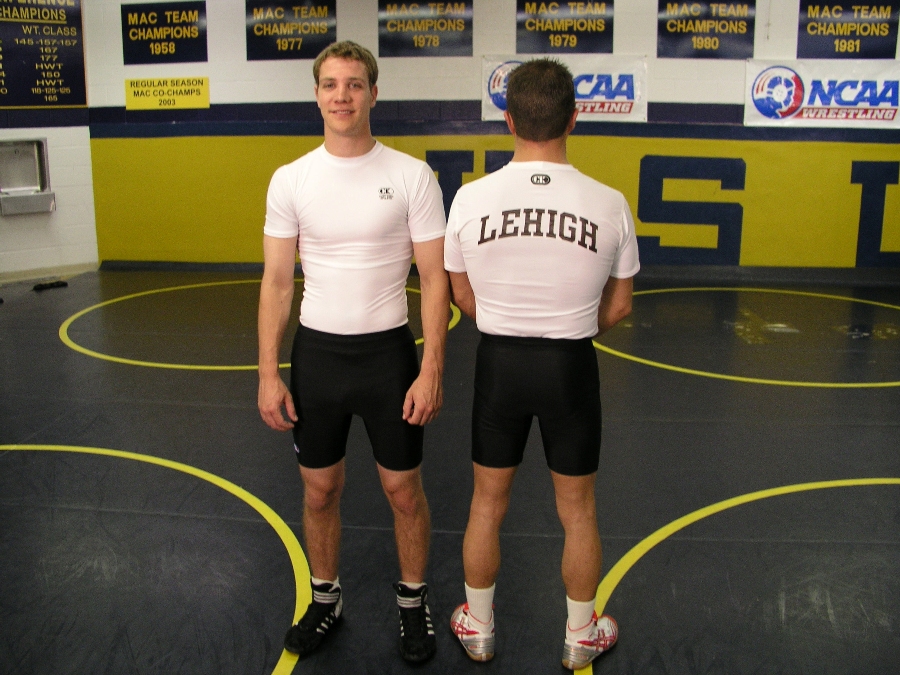
- The NCAA has permitted an additional style of uniform again this season.
- The NFHS has not approved or discussed this style.
- The following alert was circulated last
- season:
|
|
61
|
- It has come to the attention of the National Federation of State High
School Associations (NFHS) that erroneous information regarding
wrestling uniforms is being distributed by individuals not associated
with the NFHS. The NFHS Wrestling Rules Committee has not approved a new
uniform style for use at the high school level such as was recently
approved by the NCAA for use at the college level.
- Rule 4-1-1 has not been changed for the 2006-07 season. The timeframe
for discussion of any uniform changes in high school wrestling would be
at the committee’s next regularly scheduled meeting in April 2007.
|
|
62
|
|
|
63
|
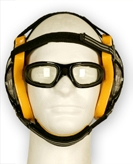
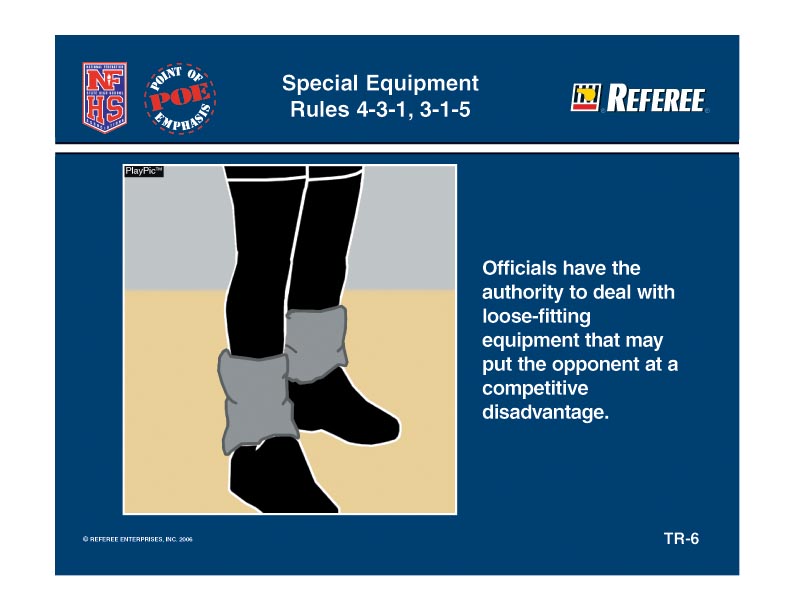
- Reporting to the mat, not properly equipped, or not ready to wrestle or
any equipment that is detected as being illegal after the match has
started is a technical violation.
|
|
64
|
|
|
65
|
|
|
66
|
|
|
67
|
|
|
68
|
|
|
69
|
|
|
70
|
|
|
71
|
|
|
72
|
|
|
73
|
- WRESTLING RULES
- REMINDERS
|
|
74
|
- When there are consecutive days of team competition, there shall be a
1-pound additional allowance granted each day for all wrestlers up to a
maximum of two pounds.
- In order to be granted this 1-pound additional allowance, a minimum of 48
hours advance notice is required for the opponent(s).
|
|
75
|
|
|
76
|
|
|
77
|
|
|
78
|
|

 Notes
Notes